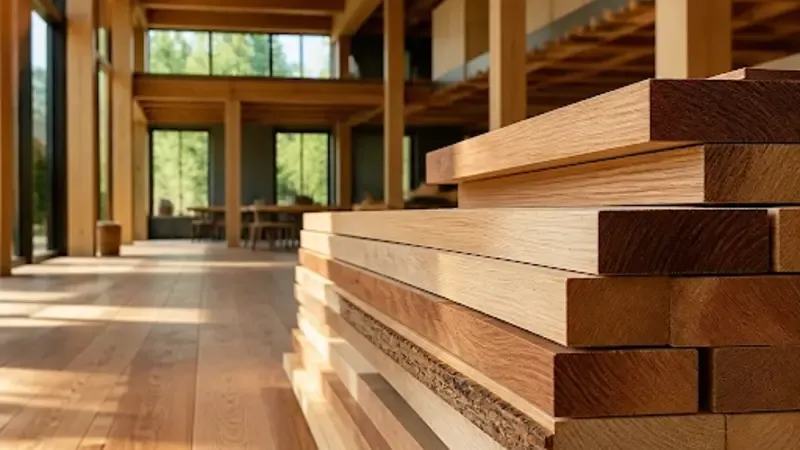
When it comes to building or renovating a home, few decisions carry as much long-term weight as the type of wood you choose. Whether you are installing hardwood flooring, constructing a deck, framing interior walls, or adding architectural millwork, the species, grade, and treatment of your lumber will determine how your home looks, performs, and holds up over decades. Wood is not a commodity — it is a living material with distinct characteristics, and understanding those characteristics is the foundation of any successful residential project.
The Hidden Complexity Behind Choosing the Right Lumber
Most homeowners walk into a home improvement store and see stacks of boards without realizing how dramatically different those boards can be from one another. Grain pattern, moisture content, density, and natural resistance to insects or rot all vary significantly between species and even between individual cuts of the same species. A board of white oak behaves very differently from a board of pine, and a kiln-dried plank performs far better in interior applications than one that has been air-dried under inconsistent conditions.
Beyond species selection, the question of treatment is equally critical. Treated wood is chemically processed to resist moisture, fungal decay, and insect damage, making it the standard choice for outdoor structures, ground-contact applications, and areas with high humidity exposure. Untreated wood, while often more visually refined and easier to finish, is best reserved for interior applications where it will not be exposed to the elements. Understanding the key differences between treated and untreated wood is essential before committing to any structural or decorative lumber purchase.
Moisture Content and Dimensional Stability
One of the most overlooked factors in wood selection is moisture content. Wood that has not been properly dried will shrink, warp, and crack as it acclimates to its environment after installation. This is particularly problematic in flooring applications, where even minor movement can cause gaps between planks, squeaking underfoot, or buckling in humid conditions. Reputable suppliers kiln-dry their lumber to precise moisture levels and clearly communicate those specifications to buyers. When sourcing wood for any interior application, always ask about the moisture content and ensure it aligns with the humidity levels typical of your region and your home’s HVAC environment.
Flooring as a Long-Term Investment
Hardwood flooring is one of the few home improvements that consistently adds measurable value to a property. Unlike carpet, which degrades within a decade, or laminate, which cannot be refinished, solid hardwood floors can be sanded and refinished multiple times over a lifespan that often exceeds a century. The key is starting with quality material and having it installed by professionals who understand how wood moves and breathes within a structure.
Atlanta homeowners in particular face a unique set of challenges when it comes to flooring. The region’s humid summers and occasionally cold winters create significant seasonal fluctuations in indoor humidity, which can stress wood floors that were not properly selected or installed. For residents in the area, choosing floors built specifically to withstand Atlanta’s climate conditions is not just a preference — it is a practical necessity that protects a significant financial investment.
Species Selection for Interior Flooring
Among the most popular hardwood species for residential flooring are red oak, white oak, maple, hickory, and walnut. Red oak remains the most widely installed species in North America due to its affordability, availability, and ability to accept a wide range of stains. White oak has surged in popularity in recent years thanks to its tighter grain and natural resistance to moisture, making it an excellent choice for kitchens and bathrooms. Hickory offers exceptional hardness and a dramatic grain pattern that suits rustic and farmhouse aesthetics, while walnut provides a rich, dark tone that works beautifully in contemporary and transitional interiors.
The Role of a Trusted Wood Supplier
Selecting the right species and treatment is only half the equation. The other half is sourcing your lumber from a supplier with the expertise, inventory depth, and quality controls to deliver consistent, premium material. This is where the relationship between a homeowner or contractor and their lumber supplier becomes genuinely important. A knowledgeable supplier does not simply fulfill orders — they help clients navigate the complexities of species selection, grading standards, and application-specific requirements.
Liberty Cedar is a premier supplier of specialty wood products, offering an extensive selection of hardwoods, softwoods, and treated lumber for both residential and commercial applications. With decades of experience in the industry, Liberty Cedar has built a reputation for delivering exceptional quality and expert guidance to contractors, architects, and homeowners who refuse to compromise on the materials that define their projects.
What Sets a Premium Supplier Apart
The difference between a commodity lumber yard and a premium wood supplier is evident in several ways. Premium suppliers maintain rigorous quality control at every stage of the supply chain, from sourcing sustainably harvested timber to ensuring proper drying, milling, and storage before delivery. They employ staff who can speak knowledgeably about the technical properties of different species and help clients match the right material to the right application. They also stand behind their products with clear grading standards and transparent communication about what each product is and is not suited for.
For contractors working on high-end residential projects, this level of service is not a luxury — it is a requirement. Delivering a finished product that meets client expectations depends entirely on the quality and consistency of the raw materials used. A single batch of improperly dried or incorrectly graded lumber can compromise an entire installation, leading to costly callbacks and damaged professional reputations.
Sustainability and Responsible Sourcing
Modern homeowners and builders are increasingly attentive to the environmental impact of their material choices. Responsibly sourced wood, certified by organizations such as the Forest Stewardship Council, ensures that the timber used in your home was harvested in ways that protect forest ecosystems, support local communities, and maintain biodiversity. Choosing certified wood is not just an ethical decision — it is also a marker of quality, as certified suppliers are held to rigorous standards throughout the supply chain.
Sustainability also extends to the longevity of the product itself. A well-selected, properly installed hardwood floor that lasts a hundred years is inherently more sustainable than a cheaper alternative that requires replacement every fifteen to twenty years. Investing in quality from the outset reduces waste, minimizes the carbon footprint associated with repeated manufacturing and installation, and creates a home that is built to endure.
Conclusion: Build with Intention, Build with Quality
Every structural and aesthetic decision in a home ultimately comes back to the materials used to build it. Wood, in all its variety and complexity, remains one of the most versatile and enduring building materials available. But its performance is entirely dependent on the choices made before a single nail is driven — the species selected, the treatment applied, the drying process followed, and the supplier trusted to deliver consistent quality. Whether you are laying floors in an Atlanta bungalow, building a cedar deck in New England, or adding custom millwork to a luxury interior, the wood you choose will define the outcome. Choose it carefully, source it responsibly, and work with suppliers who understand that the difference between good and exceptional is always in the details.