Smart Home Tech for Students: Gadgets That Actually Help You Graduate
The modern university experience has undergone a radical transformation. Gone are the days when a student’s “tech” was limited to a basic laptop and a flickering desk lamp. In 2026, the home environment is a critical variable in the academic success equation. Whether you are living in a cramped dorm or a shared apartment, the atmosphere you inhabit directly influences your ability to retain information and manage stress. Smart home technology is no longer a luxury; it is a strategic tool for graduation.
The primary hurdle for any student is the sheer volume of tasks that compete for their attention. Creating a high-performance study sanctuary starts with the digital tools you choose to surround yourself with. While a smart coffee maker can wake you up, sometimes the workload requires a more intellectual kind of automation. When the pressure of finals week hits and your to-do list looks impossible, many students find that a professional Assignment Help service like myassignmenthelp is the ultimate productivity gadget for their academic toolkit. By delegating the heavy lifting of formatting and initial research to experts, you can focus on mastering the core concepts of your major without burning out before your graduation ceremony.
1. The Circadian Rhythm: Smart Lighting for Cognitive Peak
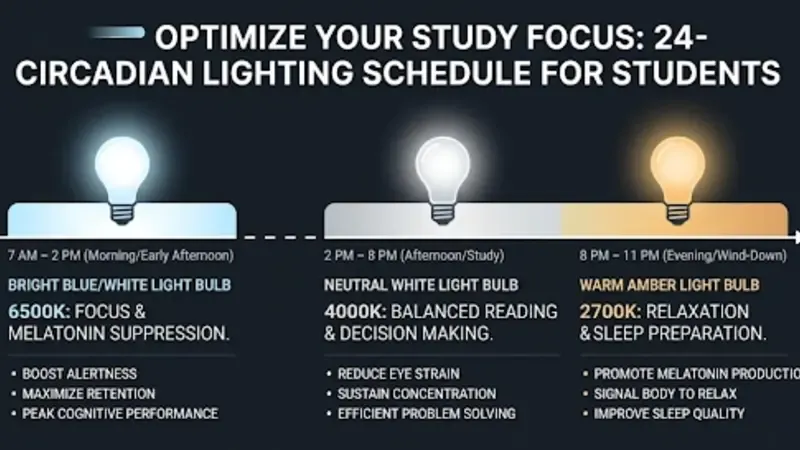
Research has consistently shown that lighting is the most influential environmental factor for student progress, contributing to a 21% increase in academic advancement. In 2026, students are moving away from standard LEDs toward “Human-Centric Lighting.” These systems mimic the sun’s natural progression, keeping you alert during the day and helping you wind down at night.
- The Focus Zone (6500K): High-intensity, blue-toned light suppresses melatonin and boosts cortisol, making it perfect for intense morning study sessions.
- The Reading Mode (4000K): A neutral white light that reduces eye strain during long hours of digital reading.
- The Wind-Down (2700K): Warm, amber light that prepares the brain for sleep, ensuring that your late-night research doesn’t lead to insomnia.
By automating these transitions, you remove the “decision fatigue” of manually adjusting your environment, allowing your brain to enter a state of deep work more quickly.
2. Ergonomics and “Active” Furniture
The global market for ergonomic study furniture is projected to surpass $10 billion this year, and for good reason. A “smart” desk isn’t just one that goes up and down; it’s one that tracks your sedentary time. In 2026, many students use desks that vibrate slightly to remind them to stand, or “wobble stools” that engage core muscles to keep the brain oxygenated.
For those tackling complex technical degrees, the physical setup is just as important as the mental one. If you are struggling with a difficult coding project while trying to maintain your posture, finding a quiet space and seeking programming assignment help can ensure your code is clean and functional while you focus on the logic behind it. This synergy between a supportive physical environment and expert academic resources is the most efficient path to graduation for the modern STEM student.
Key Smart Gadgets for Student Success 2026
| Gadget Category | Top 2026 Tech | Impact on Graduation | Key Feature |
| Focus Lighting | Philips Hue / Nanoleaf | Boosts alertness by 15% | Circadian rhythm automation |
| Climate Tech | Ecobee / Nest Learning | Reduces logic errors | AI-driven temperature stability |
| Noise Control | Loop / Sony WH-1000XM6 | Protects “Deep Work” | Adaptive noise cancellation |
| Hydration | Smart ThermoSip | Reduces cognitive “brain fog” | OLED temperature/intake display |
| Power Mgmt | Fast-Charge PD Hubs | Eliminates battery anxiety | 65W+ multi-device charging |
3. Noise-Canceling Ecosystems and Focus Auditory Tech
Living in a shared house is often the biggest barrier to a high GPA. The 2026 solution is a combination of hardware and software. High-end noise-canceling headphones are now capable of “Targeted Voice Isolation,” allowing you to block out the television in the next room while still hearing your professor’s voice during a hybrid lecture.
Furthermore, white noise machines have evolved into “Smart Acoustic Shields.” These devices connect to your phone and emit counter-frequencies that neutralize the specific pitch of a roommate’s conversation or street traffic. This creates a “bubble” of silence that is essential for writing complex dissertations or memorizing medical terminology.
4. Smart Climate Control and Mental Clarity
Academic research has found that a room temperature outside the 20°C to 22°C (68°F to 72°F) range leads to a measurable drop in mathematical and linguistic performance. Smart thermostats like the Nest Learning model use occupancy sensors to ensure your study nook is cooled or heated only when you are actually there.
For students living in older university rentals, smart window units and portable radiant heaters have become life-savers. These can be scheduled to pre-cool your bedroom before you return from the library, ensuring that the transition from “class” to “home study” is frictionless.
5. Smart Kitchen Tech: The “Brain Fuel” Factor
Nutrition is the foundation of cognitive endurance. The 2026 student kitchen features “Smart Air Fryers” and “Mini Multi-Cookers” that send notifications to your phone when a healthy meal is ready. These gadgets allow you to “set it and forget it” while you are deep into a research paper. Instead of reaching for a bag of chips because you’re too tired to cook, the app-guided recipes ensure you are eating omega-3-rich meals that actually support brain function.
6. Security and Peace of Mind
Anxiety is the enemy of concentration. It is difficult to focus on a philosophy essay if you are worried about the security of your apartment in a busy city. Smart locks with fingerprint entry and indoor “Nest Cams” provide a layer of security that allows your brain to stay in “learning mode.” Being able to verify that your space is safe with a quick glance at your phone prevents the “hyper-vigilance” that often derails a student’s focus.
Conclusion: Designing for the Degree
Graduating is a feat of endurance. Every friction point you remove from your home environment—whether it’s poor lighting, a noisy neighbor, or a cold room—saves a small amount of mental energy. When these savings are added up over a four-year degree, they become the difference between a student who just survives and a student who thrives.
By strategically combining hardware like smart lighting and ergonomic desks with digital resources like myassignmenthelp, you aren’t just decorating a room; you are building a laboratory for your own success. Your home should be the strongest tool in your academic arsenal.
Frequently Asked Questions
What is the ideal lighting for a study space?
The best setup uses “circadian lighting,” which involves bright, cool-toned lights during the day to boost alertness and warm, amber tones in the evening. This transition mimics natural sunlight, helping you maintain focus during the day and ensuring better sleep quality at night.
How can smart technology improve academic productivity?
Smart tech automates environmental distractions—such as fluctuating room temperatures or noisy surroundings—allowing the brain to stay in a “deep work” state for longer periods. By reducing the time spent on manual tasks, students can dedicate more mental energy to their core curriculum.
Do smart gadgets consume a lot of electricity?
On the contrary, most modern devices are designed for energy efficiency. Features like occupancy sensors, smart plugs, and scheduled power-offs ensure that electronics are only active when needed, which often leads to lower utility bills compared to traditional setups.
Can a small room be turned into an effective home office?
Absolutely. By using multifunctional furniture and smart organization tools, even the smallest corner can become a high-performance workspace. Minimalist design combined with adaptive tech helps prevent a small area from feeling cluttered or overwhelming.
About The author
Ella Thompson is a dedicated home lifestyle writer and productivity enthusiast. With a background in educational psychology, she explores the intersection of smart technology and modern living. Currently, she shares her expertise as a contributor for myassignmenthelp, helping others design spaces that foster focus and success.