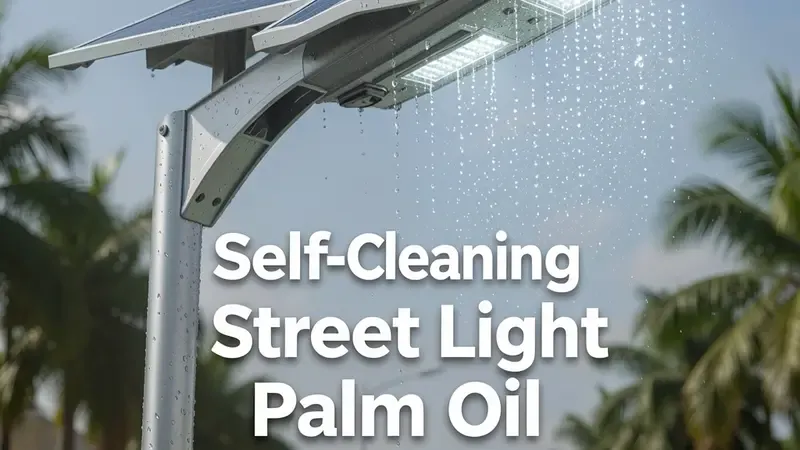
In modern cities and rural areas alike, street lighting plays a vital role in safety, security, and urban development. Traditional street lights, however, face challenges such as dust accumulation, pollution, and high maintenance costs. This is where the self cleaning street light palm oil concept emerges as a game-changer. By combining self-cleaning mechanisms with palm oil-based materials and energy solutions, these lights offer a sustainable, efficient, and low-maintenance alternative to conventional lighting systems.
What Are Self Cleaning Street Lights?
A self cleaning street light is a smart lighting system designed to maintain its cleanliness and efficiency automatically. Unlike traditional street lights, which require regular manual cleaning, self-cleaning lights use innovative technologies to stay operational with minimal human intervention.
These systems typically feature:
- Hydrophobic coatings: Surfaces that repel dust and dirt.
- Automated wipers or brushes: Mechanisms that remove debris from solar panels and light fixtures.
- Smart sensors: Detect when cleaning is necessary.
By reducing the need for human maintenance, self-cleaning lights cut labor costs and maintain consistent illumination, improving safety in both urban streets and remote areas.
Role of Palm Oil in Self Cleaning Street Lights
Palm oil contributes significantly to making self-cleaning street lights sustainable and eco-friendly. Its role can be divided into two main areas: energy generation and material innovation.
Palm Oil as a Renewable Energy Source
Palm oil by-products, including waste oil, shells, and fibers, can be converted into biofuel. In hybrid lighting systems, this biofuel supplements solar energy, ensuring continuous operation during cloudy days or at night. This integration makes its systems more energy-resilient and reduces reliance on the electricity grid.
| Feature | Traditional Street Light | Self Cleaning Street Light Palm Oil |
|---|---|---|
| Power Source | Grid electricity | Solar + Palm Oil Biofuel |
| Maintenance | Manual cleaning required | Automated cleaning mechanisms |
| Energy Efficiency | Medium | High, due to clean solar panels |
| Environmental Impact | Moderate | Low, sustainable materials and bioenergy |
| Cost Over Time | High | Lower maintenance & energy savings |
Palm Oil in Coatings and Cleaning Mechanisms
Palm oil derivatives are also used to create biodegradable coatings and surfactants. These coatings form hydrophobic surfaces that repel water, dust, and grime. When rain falls, dirt naturally washes away, keeping solar panels and LEDs clean.
Using palm oil-based materials enhances durability while reducing the environmental footprint. This makes self cleaning street light palm oil systems ideal for plantations, highways, and urban areas prone to pollution.
How Self Cleaning Street Light Palm Oil Systems Work
A typical self cleaning street light palm oil system combines three core components:
- Solar Energy Base
- Photovoltaic panels capture sunlight and store energy in batteries.
- Stored energy powers LEDs during nighttime hours.
- Self-Cleaning Mechanism
- Hydrophobic coatings or automated brushes maintain cleanliness.
- Sensors trigger cleaning cycles only when necessary, optimizing energy use.
- Palm Oil Integration
- Palm oil by-products are converted into biofuel for hybrid energy.
- Palm oil-based coatings reduce maintenance and enhance panel efficiency.
This combination ensures the system remains operational in harsh environments while reducing costs and environmental impact.
Pros and Cons
Pros
- Lower maintenance costs: Automated cleaning reduces labor.
- High energy efficiency: Clean panels maximize solar energy absorption.
- Sustainable: Palm oil by-products and biodegradable coatings support green initiatives.
- Reliability: Performs well in dusty, rainy, or remote environments.
- Long-term savings: Reduced repair and energy costs over time.
Cons
- Initial investment: Higher upfront costs than traditional lights.
- Palm oil sourcing concerns: Unsustainable cultivation can harm ecosystems.
- Complexity: Maintenance of automated systems may require specialized knowledge.
Applications of Self Cleaning Street Light Palm Oil Systems
Self cleaning street light palm oil systems are versatile and can be deployed in various settings:
- Urban areas: Streets, parks, and commercial zones benefit from reduced maintenance and consistent lighting.
- Plantations and agricultural zones: Dust, pollen, and residues often impair solar panels; self-cleaning features maintain efficiency.
- Highways and remote roads: Reliable illumination improves safety in locations where manual cleaning is difficult.
- Industrial zones: Reduces downtime caused by dirt, oil, or chemical residue accumulation.
Environmental and Sustainability Impact
Using palm oil in self-cleaning street lights aligns with circular economy principles:
- Recycling agricultural waste: By-products like shells and fibers are repurposed for energy.
- Reducing pollution: Palm oil-based biodegradable coatings minimize chemical impact.
- Sustainable energy use: Hybrid solar and biofuel systems reduce dependence on fossil fuels.
Important: To ensure sustainability, it is critical to source palm oil from certified, environmentally responsible suppliers. This prevents deforestation and protects biodiversity.
Comparison Table
| Aspect | Traditional Street Light | Self Cleaning Street Light Palm Oil |
|---|---|---|
| Cleaning | Manual | Automatic (hydrophobic or brush-based) |
| Energy Source | Grid only | Solar + Palm Oil Biofuel |
| Environmental Impact | Moderate | Low, sustainable materials |
| Lifespan | 5–10 years | 10–15 years (less downtime) |
| Cost Efficiency | Moderate | High (long-term savings) |
| Maintenance | Frequent | Minimal |
FAQs
1. What is a self cleaning street light palm oil system?
It is a solar-powered street light that uses palm oil-based energy or materials and self-cleaning technology to remain operational with minimal maintenance.
2. How does palm oil help in street lighting?
Palm oil by-products can be converted into biofuel or used in biodegradable coatings, enhancing energy resilience and reducing environmental impact.
3. Are self-cleaning street lights expensive?
Initial costs are higher, but savings from reduced maintenance and energy efficiency make them cost-effective long-term.
4. Where are these systems most effective?
They work well in urban streets, plantations, highways, and remote areas prone to dust or pollution.
5. Is palm oil sourcing sustainable?
Sustainable sourcing from certified producers ensures environmental benefits without deforestation or biodiversity loss.
6. How often do self-cleaning lights require maintenance?
Maintenance is minimal; sensors and automated cleaning mechanisms handle most tasks, with occasional checks recommended.
7. Can palm oil completely replace solar energy?
No, it supplements solar energy, ensuring reliability during low sunlight periods or at night.
Conclusion
The self cleaning street light palm oil system represents a leap forward in sustainable, intelligent lighting. By combining renewable energy, eco-friendly materials, and automated cleaning, these lights offer a reliable, low-maintenance solution for urban and rural areas.
As cities and industries seek greener, more cost-effective lighting solutions, integrating palm oil and self-cleaning technology ensures efficiency, durability, and sustainability. This innovation not only illuminates streets but also contributes to a cleaner, more responsible future for energy and urban infrastructure.